
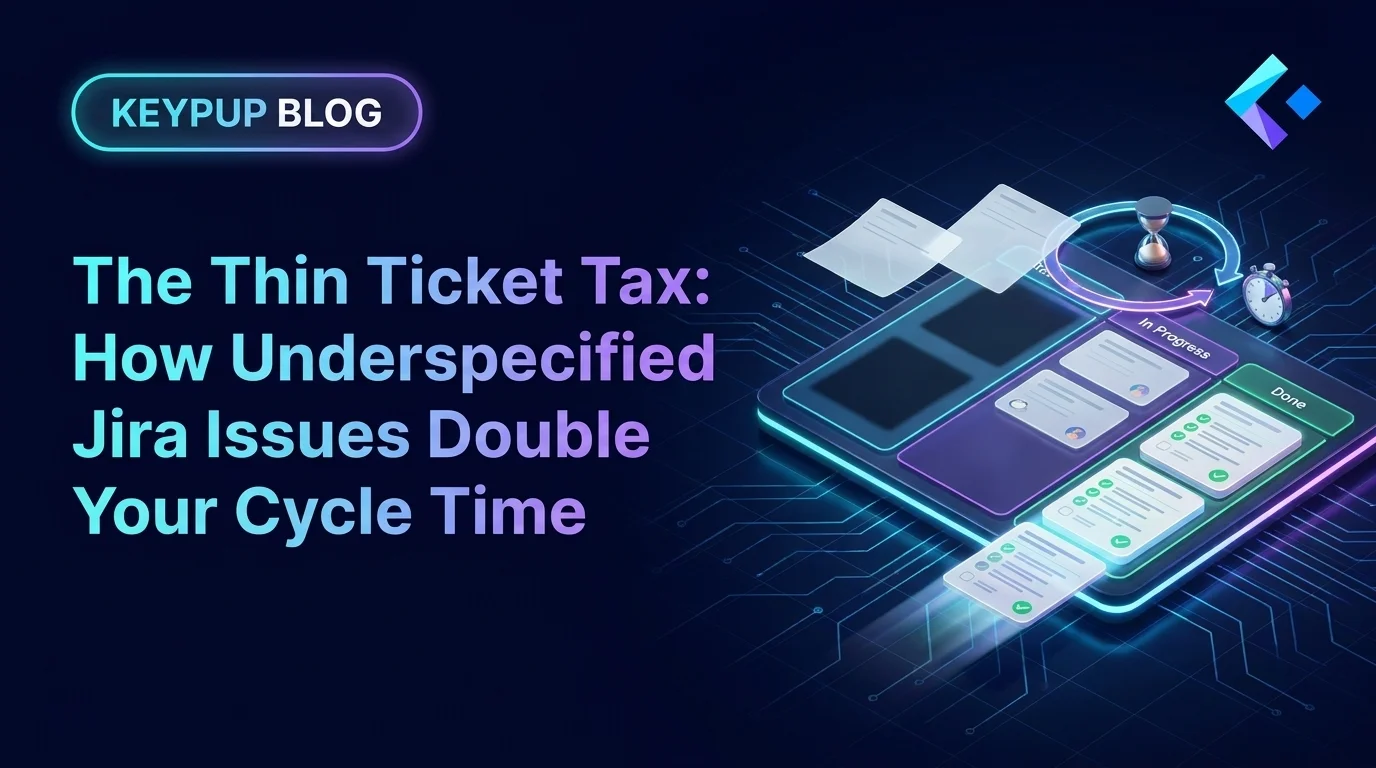
The Thin Ticket Tax: How Underspecified Jira Issues Double Your Cycle Time

The Thin Ticket Tax: How Underspecified Jira Issues Double Your Cycle Time

Engineers on Reddit keep saying the same thing: the ticket said "fix the export" and nothing else. In a typical enterprise organization, 38% of completed Jira issues have an empty or one-line description, and once started they take twice as long, bounce back to In Progress 3.5 times as often and get changes requested in review twice as often. Learn how Keypup MCP measures ticket quality from issue descriptions, workflow history, sprints, comments and linked pull requests.
Arnaud Lachaume
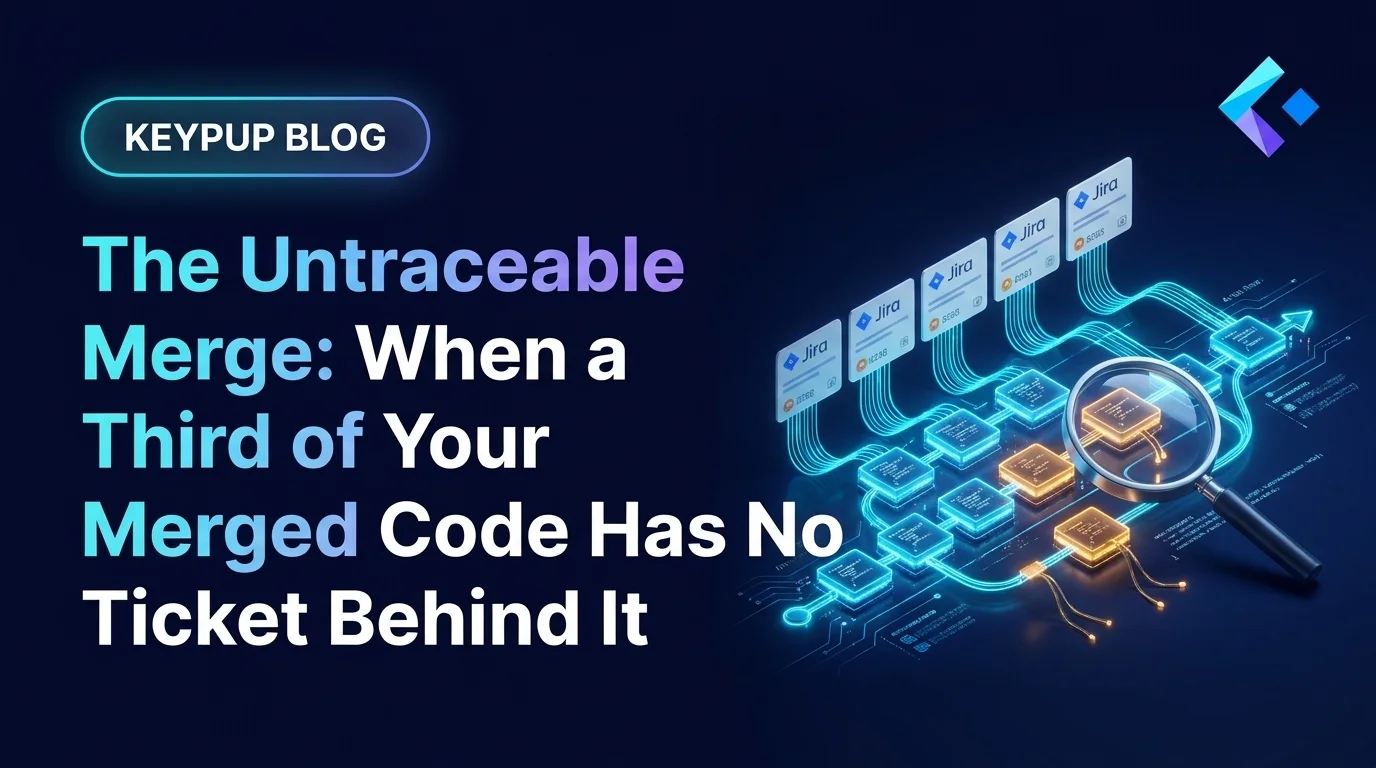
The Untraceable Merge: When a Third of Your Merged Code Has No Ticket Behind It

The Untraceable Merge: When a Third of Your Merged Code Has No Ticket Behind It

Enterprise change policies say every change traces back to a ticket, but in a typical organization 34% of merged pull requests resolve no Jira issue, carrying 29% of the code. Learn what engineering leaders on Reddit say about pull requests without linked issues, audit traceability and R&D capitalization, and how Keypup MCP measures the traceability gap from resolved issues, branch names, issue types, approvals and mergers.

Thomas Williams
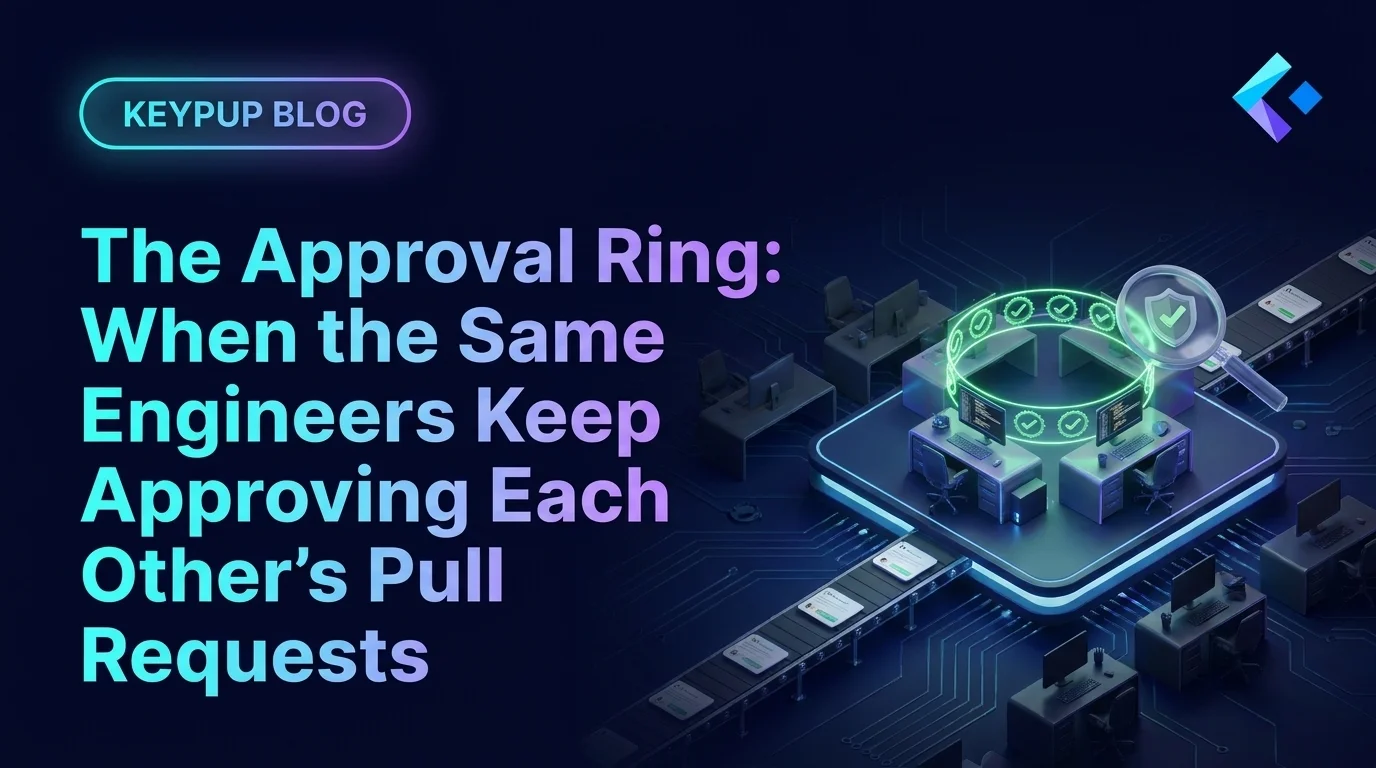
The Approval Ring: When the Same Two Engineers Keep Approving Each Other's Pull Requests

The Approval Ring: When the Same Two Engineers Keep Approving Each Other's Pull Requests

A four-eyes review policy checks that someone else approved a pull request, not who. In a typical enterprise, 168 pairs of engineers mostly approve each other, on 17% of merged pull requests and 26% of the code. Learn what engineering leaders on Reddit say about reciprocal approvals and rubber-stamp review buddies, and how Keypup MCP measures approval concentration from review authors, pull request authors, review dates, review bodies and lines changed.

Liam Davis
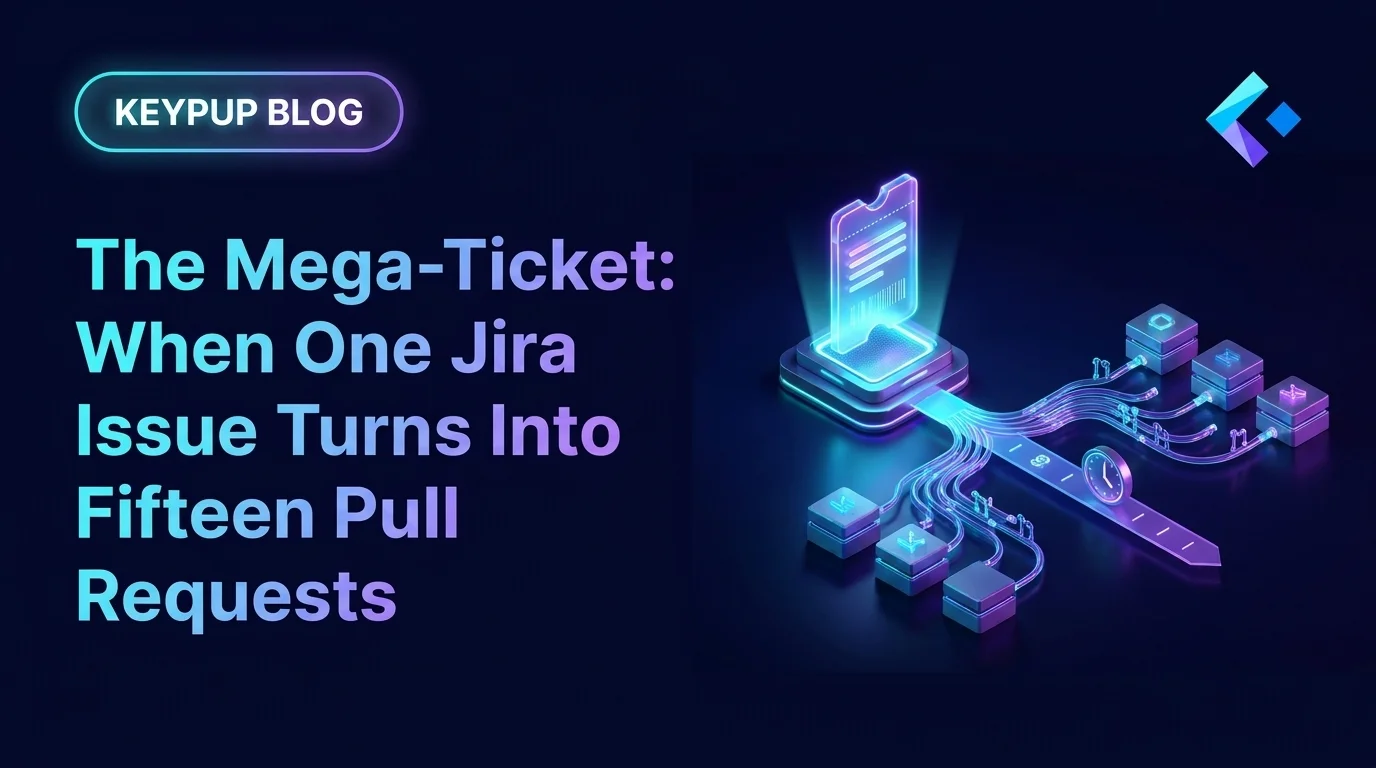
The Mega-Ticket: When One Jira Issue Turns Into Fifteen Pull Requests

The Mega-Ticket: When One Jira Issue Turns Into Fifteen Pull Requests

Throughput counts issues, but one closed issue can hide one pull request or fifteen. In a typical enterprise, 14% of closed Jira issues need six or more pull requests, carry half the code that changed and take eight times longer to close. Learn what engineering leaders on Reddit say about tickets that never get split, and how Keypup MCP measures issue size through linked pull requests, lines changed, merge spans and story points.

Stephane Ibos
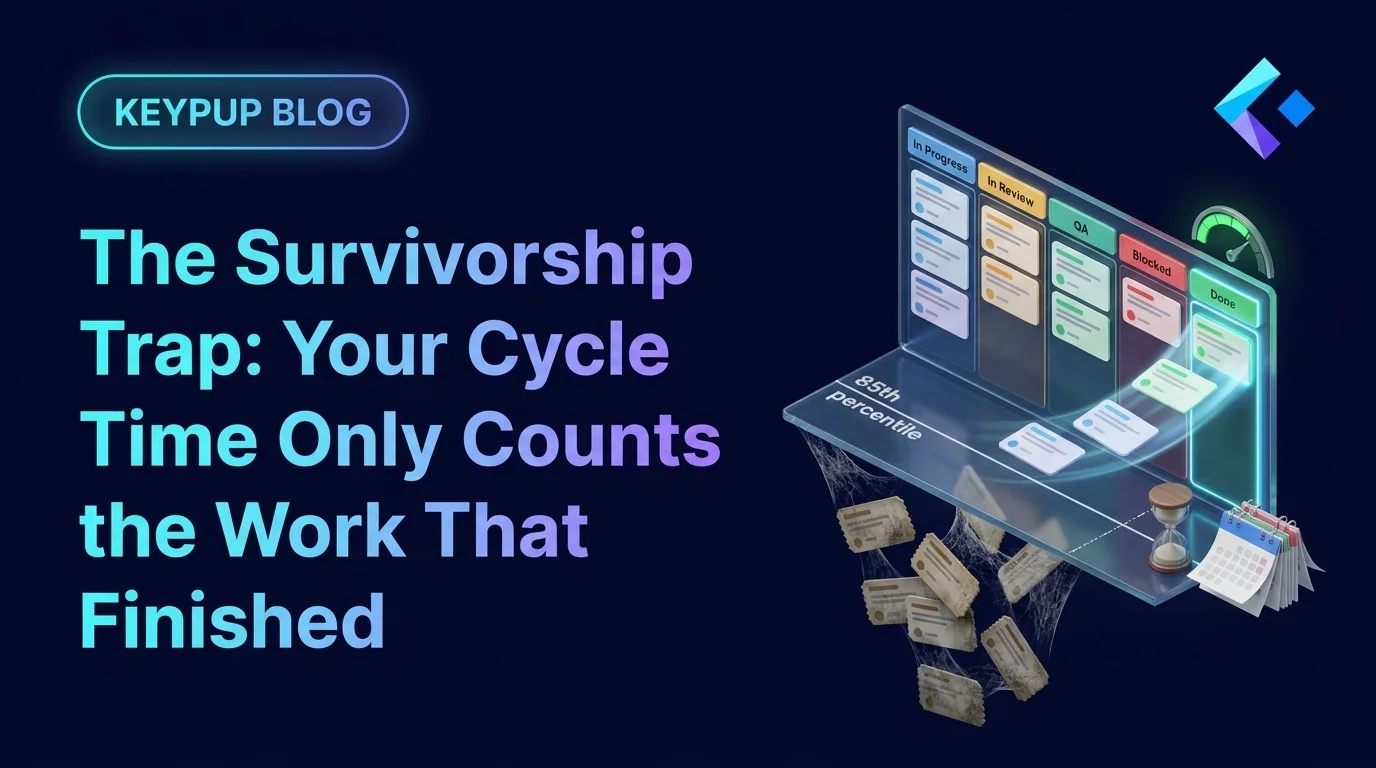
The Survivorship Trap: Your Cycle Time Only Counts the Work That Finished

The Survivorship Trap: Your Cycle Time Only Counts the Work That Finished

Cycle time is measured on closed work, so the items stuck in Blocked, In Review or QA for weeks never appear in it. In a typical enterprise, the median open item is twice as old as the median closed one, and a third of work in progress is already older than the 85th percentile the dashboard reports. Learn what engineering leaders on Reddit say about green cycle time charts and stuck work, and how Keypup MCP measures the age of open Jira issues, where they sit still and what code is behind them.

Arnaud Lachaume
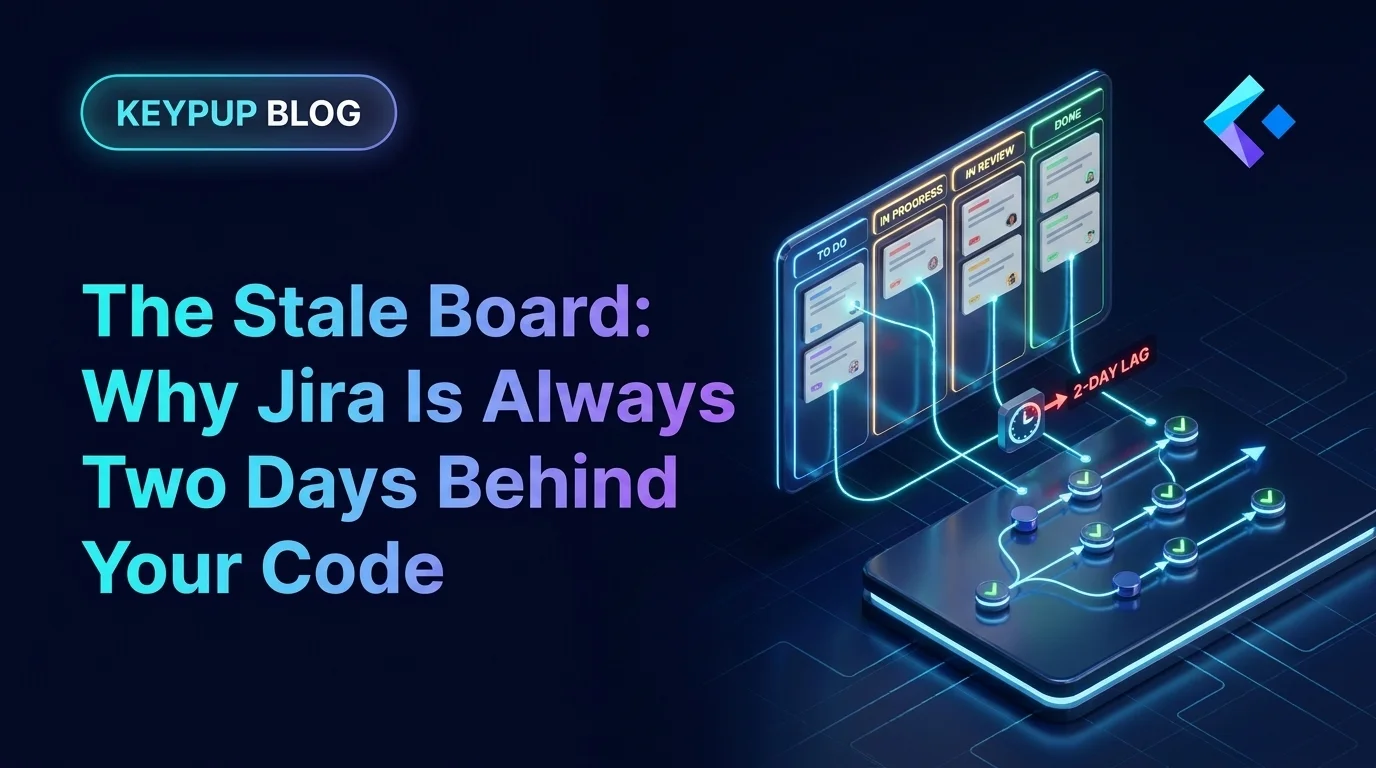
The Stale Board: Why Jira Is Always Two Days Behind Your Code

The Stale Board: Why Jira Is Always Two Days Behind Your Code

In a typical enterprise, the Jira board trails Git by almost two business days per issue: code is written before tickets reach "In Progress", and tickets stay open days after their pull requests merge. Learn what engineering leaders on Reddit say about stale boards, status-chasing standups and sprint carryover that exists only on paper, and how Keypup MCP compares each issue's workflow timeline with the commits and merges of its linked pull requests to measure the lag and list the tickets to close.

Thomas Williams
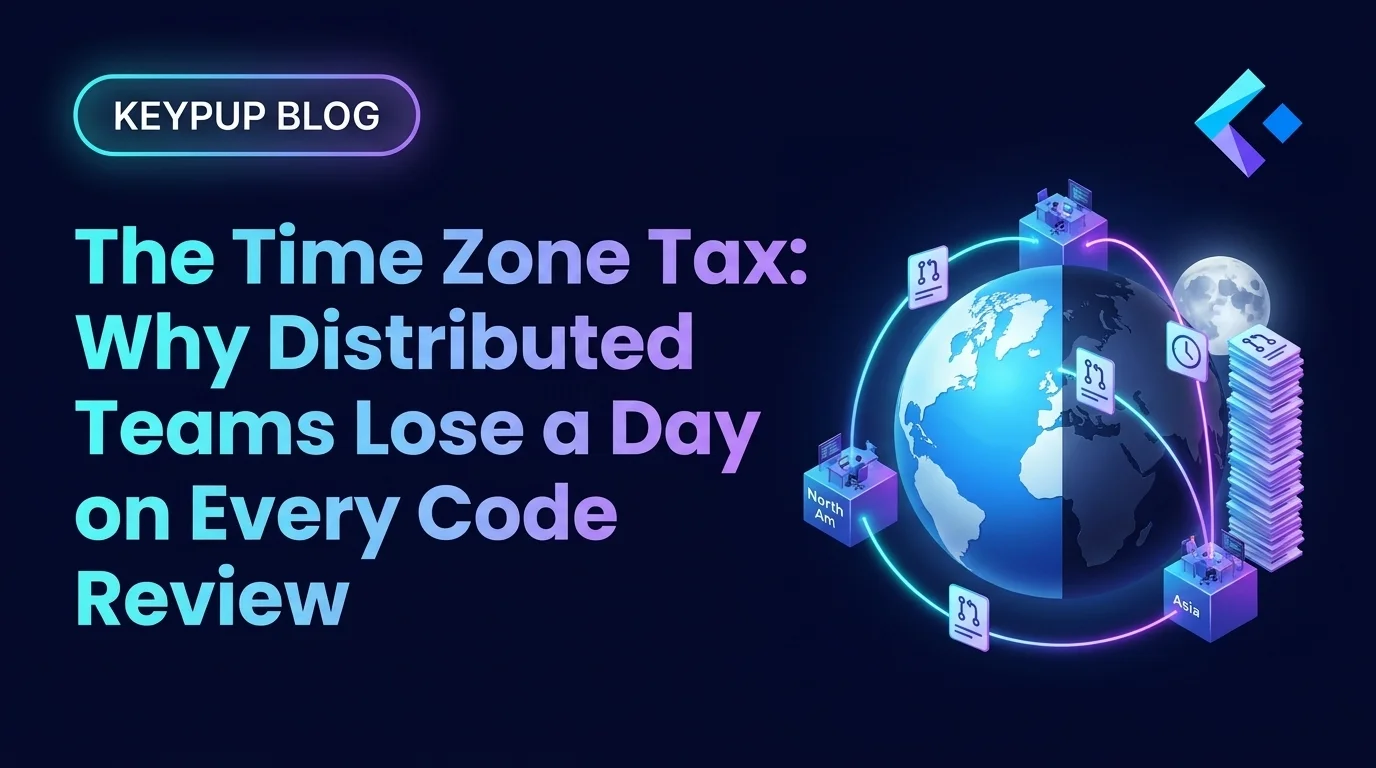
The Time Zone Tax: Why Distributed Teams Lose a Day on Every Code Review

The Time Zone Tax: Why Distributed Teams Lose a Day on Every Code Review

In a typical distributed enterprise, a pull request reviewed from another hub waits 4.1 times longer for a first review, and each round of requested changes costs a day instead of a few hours. Learn what engineering leaders on Reddit say about code review across time zones, and how Keypup MCP measures the time zone tax, from the hour a review request is sent to the teams that review locally and the cross-hub pull requests to hand off before logging off.

Stephane Ibos
The Inner Source Tax: Why Pull Requests to Another Team's Repository Wait Days

The Inner Source Tax: Why Pull Requests to Another Team's Repository Wait Days

In a typical enterprise, a pull request sent to another team's repository waits 3.8 times longer for a first review, takes almost five working days to merge and is three times more likely to be abandoned. Learn what engineering leaders on Reddit say about cross-team contributions, and how Keypup MCP measures the inner source tax, from which owning teams are bottlenecks to which cross-team pull requests to unblock today.

Liam Davis
Merge Limbo: Why Approved Pull Requests Wait Days to Ship

Merge Limbo: Why Approved Pull Requests Wait Days to Ship

In a typical enterprise, the longest phase of a pull request's life starts after it is approved: a median of 9.6 business hours from last approval to merge, and 31% of approved pull requests waiting two business days or more. Learn what engineering leaders on Reddit say about approved code that doesn't ship, and how Keypup MCP measures merge limbo, from who holds the merge button to which approved pull requests can be merged today.

Stephane Ibos
The Reviewer Bystander Effect: Why More Reviewers Make Pull Requests Wait Longer

The Reviewer Bystander Effect: Why More Reviewers Make Pull Requests Wait Longer

In a typical enterprise, a pull request sent to five reviewers waits 3.4 times longer for its first review than one sent to a single reviewer, and 69% of the people asked never respond. Learn what engineering leaders on Reddit say about review requests nobody owns, and how Keypup MCP measures the reviewer bystander effect, from panel size to the people who actually review.

Arnaud Lachaume
The Backport Tax: Why Supporting Multiple Release Versions Quietly Drains Delivery Capacity

The Backport Tax: Why Supporting Multiple Release Versions Quietly Drains Delivery Capacity

In a typical enterprise that supports several versions of its product, one merged pull request in five targets an older release line, and customers on the oldest line wait ten business days for fixes already merged on main. Learn what engineering leaders on Reddit say about backports and LTS maintenance, and how Keypup MCP measures the backport tax, line by line.

Thomas Williams
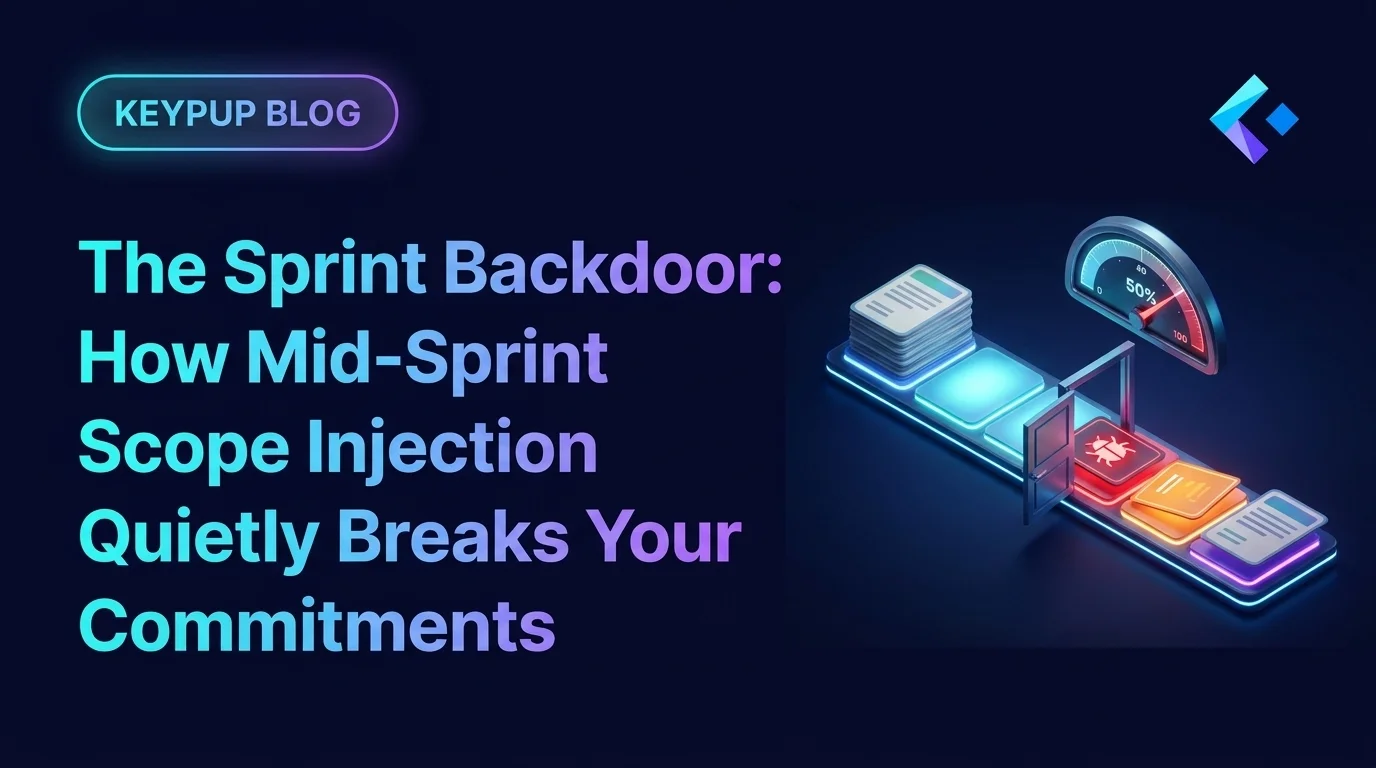
The Sprint Backdoor: How Mid-Sprint Scope Injection Quietly Breaks Your Commitments

The Sprint Backdoor: How Mid-Sprint Scope Injection Quietly Breaks Your Commitments

In a typical enterprise, more than one sprint issue in five is created after the sprint has started, and projects that take in the most of it close as little as half of their planned story points. Learn what engineering leaders on Reddit say about mid-sprint scope injection, and how Keypup MCP measures what comes through the sprint backdoor, what it displaces and what to push back today.

Liam Davis